Blog
- Home
- Resources
- Bright Ideas Blog
- Selecting Lighting Products That Minimize Installation Time
Selecting Lighting Products That Minimize Installation Time
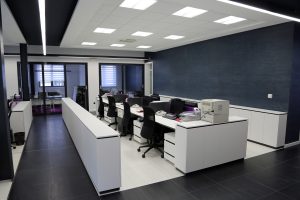
Commercial lighting projects involve more than choosing fixtures with the right lumen output, wattage, and energy efficiency. For electrical contractors, facility managers, property owners, and commercial developers, installation time can significantly influence the total cost and complexity of a lighting project.
When a project involves hundreds or thousands of fixtures, even relatively small differences in mounting, wiring, assembly, and commissioning requirements can add up. A lighting product that takes just a few additional minutes to install may create substantial additional labor across an entire building. Selecting commercial LED lighting fixtures designed for efficient installation can help contractors manage labor costs, reduce disruption, and complete projects within demanding construction or renovation schedules.
However, installation efficiency should never come at the expense of lighting quality, electrical safety, or long-term performance.
This guide explores the product features, installation considerations, and purchasing strategies that can help businesses and contractors make more informed commercial lighting decisions.
Why Installation Time Matters in Commercial Lighting Projects
Labor Is Part of the Total Project Cost
The purchase price of a lighting fixture represents only one component of its total installed cost. Depending on the project, installing a commercial lighting system may require:
- Removing existing lighting fixtures and associated equipment
- Preparing mounting surfaces and ceiling openings
- Installing mounting brackets, suspension systems, or hardware
- Making electrical connections
- Modifying ceilings or existing fixture locations
- Installing occupancy sensors, daylight sensors, and other controls
- Programming and commissioning lighting control systems
- Testing completed installations
- Removing and disposing of old equipment
Consider two commercial LED fixtures with similar purchase prices. One arrives with factory-installed mounting components, an accessible wiring compartment, and an integrated sensor. The other requires additional assembly, separately purchased brackets, and a separately mounted sensor. Although both products may provide comparable lighting performance, their installation requirements could differ substantially.
Illustrative labor calculation:
|
Project size |
Time saved per fixture |
Total labor hours saved |
|
100 fixtures |
5 minutes |
8.3 hours |
|
250 fixtures |
5 minutes |
20.8 hours |
|
500 fixtures |
5 minutes |
41.7 hours |
|
1,000 fixtures |
5 minutes |
83.3 hours |
These figures are hypothetical and illustrate the cumulative effect of installation time, not guaranteed savings from any particular product.
Installation Can Disrupt Building Operations
Lighting upgrades frequently take place in occupied commercial buildings.
Offices may need to temporarily close work areas. Retail stores must coordinate installation around customers and merchandising. Schools and healthcare facilities often have limited windows for construction activity.
Parking facilities, warehouses, and multifamily properties may also require temporary restrictions on access while electrical work is performed.
Choosing lighting products that simplify installation can help reduce the duration of individual work activities and make phased installation easier to coordinate. For facilities that cannot easily suspend operations, this can be an important consideration.
Start by Evaluating Existing Lighting Conditions
Before selecting commercial lighting products, contractors and facility teams should understand the conditions installers will encounter.
A product designed for straightforward installation in new construction may not be the most practical choice for an existing building.
What Should a Pre-Installation Lighting Assessment Include?
A useful assessment should document:
- Existing fixture types: Troffers, downlights, strip lights, high bays, wall packs, or other configurations
- Mounting conditions: Suspended ceilings, surface mounting, recessed housings, pendant systems, or wall mounting
- Ceiling construction: Grid dimensions, ceiling materials, available clearance, and accessibility
- Electrical infrastructure: Existing wiring, junction box locations, circuit configuration, and available voltage
- Lighting controls: Existing switches, dimmers, sensors, control wiring, and networked systems
- Fixture dimensions: Existing openings, mounting footprints, and physical clearance
- Installation access: Ceiling heights, lift requirements, obstructions, and occupied work areas
- Component condition: Existing housings, electrical connections, and other equipment that may be retained or replaced
For example, replacing recessed troffers in a standard suspended ceiling may be relatively straightforward when the replacement fixtures match the existing grid configuration. However, nonstandard openings, damaged ceiling components, or incompatible electrical connections can introduce additional work. Identifying these conditions before ordering products helps reduce the likelihood of unexpected modifications, incompatible fixtures, and project delays.
Look for Lighting Products Designed for Retrofit Applications
LED Retrofit Kits vs. Complete Fixture Replacement
One of the first decisions in an existing building is whether to install LED retrofit kits or replace entire lighting fixtures. LED retrofit kits are designed to convert compatible existing lighting equipment to LED technology while retaining certain components of the original fixture or housing.
Depending on the product and application, a retrofit kit may allow contractors to retain an existing housing or mounting arrangement rather than remove the complete fixture. Potential advantages include less demolition, reduced ceiling disturbance, and fewer mounting modifications.
Common commercial retrofit applications include:
- LED troffer retrofit kits for offices and schools
- LED downlight retrofit products for recessed lighting
- LED strip fixture retrofit kits for utility and commercial spaces
- Compatible high-bay retrofit solutions for industrial facilities
- LED wall pack retrofit products for exterior lighting
However, retrofit kits are not automatically the faster or more economical option.
Compatibility With Existing Openings and Mounting Conditions
A replacement fixture that works with existing mounting locations can potentially eliminate substantial preparation work. Before selecting a product, verify whether it is compatible with:
- Existing ceiling grid dimensions
- Recessed openings and housings
- Junction box locations
- Wall mounting patterns
- Suspension systems
- Available installation clearances
Compatibility is especially valuable in large commercial renovations where even minor modifications must be repeated across numerous locations.
Evaluate Mounting Methods Before Selecting Fixtures
How Is the Fixture Actually Installed?
Lighting specifications often emphasize lumens, wattage, color temperature, and efficacy. While these are essential, contractors should also review the installation instructions and mounting requirements.
Important questions include:
- What mounting hardware is included with the fixture?
- Are additional brackets, adapters, or suspension components required?
- Does the fixture require field assembly?
- Can mounting hardware be installed before the fixture is positioned?
- How many steps are involved in securing the fixture?
- Are multiple mounting configurations available?
- Does installation require specialized tools or equipment?
Some fixtures feature mounting systems that allow brackets or plates to be installed separately before the fixture is attached. Others may offer simplified access to mounting points or integrated hardware that reduces assembly. The advantage depends on the specific product and installation conditions.
Fixture Weight and Physical Size Matter
Fixture weight can affect handling, installation equipment, and crew requirements. This is particularly relevant for:
- Industrial LED high-bay lighting
- Exterior area and flood lighting
- Parking garage fixtures
- Large linear commercial fixtures
- Lighting installed at significant heights
Large or heavy fixtures may require additional installers, lifting equipment, or more complicated positioning.
For high-ceiling applications, the number of operations performed at elevation can also influence project scheduling. A compact, appropriately designed fixture may be easier to maneuver than a larger alternative, provided it meets the project’s lighting and mounting requirements. Fixture dimensions and weight should therefore be evaluated alongside photometric performance and electrical specifications.
Pay Attention to Wiring and Electrical Connections
Simplified Wiring Can Reduce Installation Steps
Electrical connections are a critical part of commercial lighting installation. Depending on the application, certain product features may simplify access and reduce unnecessary handling.
Look for:
- Accessible wiring compartments
- Clearly identified conductors and connection points
- Factory-installed wiring leads
- Manufacturer-approved quick-connect components
- Tool-less or simplified access panels
- Integrated junction boxes where appropriate
- Flexible wiring entry locations
For example, a fixture with an easily accessible wiring compartment may allow an electrician to complete connections without repeatedly repositioning the entire fixture. Similarly, a manufacturer-approved quick-connect system may simplify certain connections compared with an arrangement requiring more field preparation.
Consider Driver and Component Accessibility
The location of LED drivers, wiring terminals, sensors, and other components can influence both installation and future maintenance.
Before specifying a fixture, determine:
- Can the driver be accessed without removing the complete fixture?
- Does opening the wiring compartment require extensive disassembly?
- Can components be serviced without disturbing surrounding ceiling materials?
- Are sensors and control components accessible?
- Are replacement components available?
Products that provide convenient component access may offer advantages throughout the life of the lighting system.
Consider Field-Selectable LED Fixtures
Selectable Wattage
Field-selectable LED fixtures allow installers to choose among manufacturer-defined wattage or output settings.
These products can be particularly useful when similar fixtures are needed across multiple areas of a commercial building but different light outputs are required.
Potential benefits include:
- Reducing the number of fixture models that must be ordered
- Simplifying inventory management
- Supporting standardization across different building areas
- Allowing permitted adjustments during installation or commissioning
- Reducing the complexity of sorting and distributing fixtures
For example, a facility may have multiple corridors, offices, and common areas requiring similar fixture configurations but different illumination levels.
Selectable Color Temperature
Field-selectable correlated color temperature (CCT) products provide similar flexibility. A single fixture model may offer several manufacturer-defined color temperature settings, such as 3000K, 3500K, 4000K, or 5000K. This can reduce the number of individual stock-keeping units (SKUs) required when different spaces have different lighting specifications. However, settings should be determined by the lighting design and documented before installation. Field-selectable fixtures are not a substitute for proper lighting calculations, and not every combination of wattage and CCT will provide identical output or efficacy.
Standardization Can Simplify Large Commercial Lighting Projects
Using a limited number of compatible fixture families can make large installations more manageable. Standardization may provide several advantages:
- Installers become familiar with recurring mounting procedures.
- Fewer hardware variations are required.
- Wiring configurations become more consistent.
- Fixture sorting and jobsite distribution become simpler.
- Purchasing and inventory management are streamlined.
- Maintenance teams work with fewer product variations.
- Replacement inventory can be easier to manage.
Consider a property management company upgrading lighting across several apartment buildings.
If each property uses completely different corridor, stairwell, and utility lighting products, installation and maintenance teams may need to accommodate numerous mounting arrangements, replacement components, and control configurations.
Lighting Controls Can Add Significant Installation and Commissioning Time
Evaluate the Entire Controls Installation
A fixture may be relatively simple to mount while the associated controls system requires substantial additional work. Commercial lighting controls may involve:
- Control wiring and switches
- Occupancy and daylight sensors
- Gateways and controllers
- Network infrastructure
- Device addressing and identification
- Programming and zoning
- Scheduling and dimming configuration
- Functional testing and commissioning
For this reason, lighting controls should be considered during initial product selection rather than treated as a separate decision after fixtures have been ordered.
Wireless Lighting Controls May Reduce Wiring Requirements
Wireless lighting controls can reduce the need for dedicated control wiring in suitable applications. Potential advantages include flexible sensor placement, software-based zoning, and the ability to modify certain control configurations without extensive rewiring.
Wireless systems can be particularly attractive in existing buildings where installing new control wiring would require opening ceilings or modifying finished surfaces.
However, wireless lighting controls still require installation, configuration, testing, and ongoing maintenance.
Factory-Integrated Controls
Fixtures ordered with compatible, factory-integrated controls may reduce some field assembly and wiring tasks. Before purchasing, verify that the selected control components support the intended system, required functionality, and applicable project specifications. A factory-installed sensor is only beneficial when it is compatible with the planned lighting controls strategy.
Plan for Programming and Commissioning
Installation does not necessarily end when a light fixture turns on. Depending on the system, commissioning may include:
- Identifying individual devices
- Creating lighting groups and zones
- Configuring occupancy sensor behavior
- Setting schedules and dimming levels
- Calibrating daylight-responsive controls
- Testing communication between devices
- Verifying required control sequences
For large projects, the commissioning process can represent a meaningful portion of the overall work. Project teams should determine who will perform commissioning, what training is required, and whether specialized software or equipment is necessary.
Don’t Sacrifice Lighting Performance for Faster Installation
Ease of installation should never become the primary criterion at the expense of lighting performance or compliance. A commercial lighting fixture must still satisfy the requirements of its intended application.
Essential Performance Considerations
- Illumination levels: Fixtures must provide appropriate light levels for the activities performed in each space.
- Light distribution: The fixture’s optical design should support uniformity, visibility, and appropriate coverage.
- Glare control: Excessive glare can affect visual comfort and performance, particularly in offices, classrooms, and other occupied environments.
- Color characteristics: Color temperature and color rendering should align with the needs of the space.
- Energy efficiency: Fixture wattage, efficacy, operating schedules, and controls should be considered together.
- Long-term value: Expected service life, warranty coverage, maintenance requirements, and replacement availability should be evaluated.
- Rebate eligibility: Projects pursuing utility incentives should verify applicable efficiency, controls, product qualification, and program requirements before purchasing.
Resources such as the DesignLights Consortium Qualified Products Lists can help project teams research eligible commercial lighting products and controls for programs that use DLC qualifications. The Illuminating Engineering Society also provides lighting standards and technical resources that support appropriate lighting design.
A fixture that saves a few minutes during installation but fails to deliver suitable lighting performance is not an effective long-term choice.
Consider Future Maintenance During Installation Planning
Installation labor is only one part of a commercial lighting system’s lifetime cost. A fixture that is easy to install but difficult to service may create additional expenses over time.
Important maintenance considerations include:
- Driver accessibility
- Availability of replaceable components
- Access to sensors and controls
- Fixture cleaning requirements
- Replacement product availability
- Whether servicing requires removing the complete fixture
- Access requirements for elevated installations
For example, servicing a high-bay fixture may require a lift and temporarily restrict warehouse operations.
Commercial Lighting Product Selection Checklist
Before finalizing a lighting specification or purchase order, use the following checklist to evaluate installation requirements.
|
Evaluation area |
Questions to ask |
|
Mounting |
How is the fixture secured? Is hardware included? |
|
Assembly |
Does the fixture require field assembly? |
|
Retrofit compatibility |
Can existing openings, housings, or mounting locations be reused? |
|
Electrical connections |
Are wiring compartments accessible and connections clearly identified? |
|
Component access |
Can drivers, sensors, and other components be reached for service? |
|
Integrated features |
Are compatible sensors or controls factory installed? |
|
Controls |
Is additional wiring, programming, or commissioning required? |
|
Field selection |
Can wattage or CCT options reduce product variations? |
|
Standardization |
Can compatible fixture families be used across multiple spaces? |
|
Jobsite logistics |
Are fixtures clearly labeled and easy to distribute? |
|
Access equipment |
Are lifts or specialized installation equipment required? |
|
Maintenance |
Can components be serviced without extensive disassembly? |
|
Performance |
Does the product meet lighting design and environmental requirements? |
|
Compliance |
Does it satisfy applicable safety, code, and rebate requirements? |
Contractors and facility teams can use these questions when comparing products from different manufacturers.
Look at Total Installed Cost, Not Just Fixture Price
The lowest-priced lighting fixture does not necessarily produce the lowest overall project cost. A more useful purchasing comparison considers the complete cost of acquiring, installing, operating, and maintaining the lighting system. A simplified evaluation might include:
Total installed project cost = Fixture and material costs + Installation labor + Controls and commissioning + Required equipment + Removal and disposal + Other project expenses
Long-term evaluation should also account for energy consumption, maintenance, and anticipated replacement costs.
Work With Bay Lighting to Select the Right Commercial Lighting Products
Selecting commercial lighting products requires balancing installation efficiency, lighting performance, controls compatibility, energy consumption, and long-term maintenance needs.
At Bay Lighting, we help electrical contractors, commercial property owners, facility managers, and businesses evaluate lighting solutions for new construction, renovations, and LED retrofit projects.
Whether you are planning an office lighting upgrade, warehouse LED retrofit, multifamily lighting renovation, or large commercial construction project, choosing appropriate products early can help simplify the purchasing and installation process.
Contact Bay Lighting to discuss your commercial lighting project and explore lighting supply and design solutions for facilities throughout Maryland, Washington, DC, and Northern Virginia.